How to Become a Paramedical Tattoo Artist in Australia
If you've ever watched someone see a realistic areola on their reconstructed breast for the first time, or seen a long surgical scar soften into the skin around it, you'll understand why so many people are drawn to paramedical tattooing. It's skilled, creative work, and it matters deeply to the people who receive it.
But if you're new to the industry, the path in can look confusing. Do you need to be a tattoo artist first? What qualifications do you need? How long does training take? This guide walks you through the steps, honestly and in plain English.
What is paramedical tattooing?
Paramedical tattooing (also called medical tattooing) uses tattoo techniques and specialised pigments to change the appearance of skin after surgery, trauma or life changes. The two most in-demand services are:
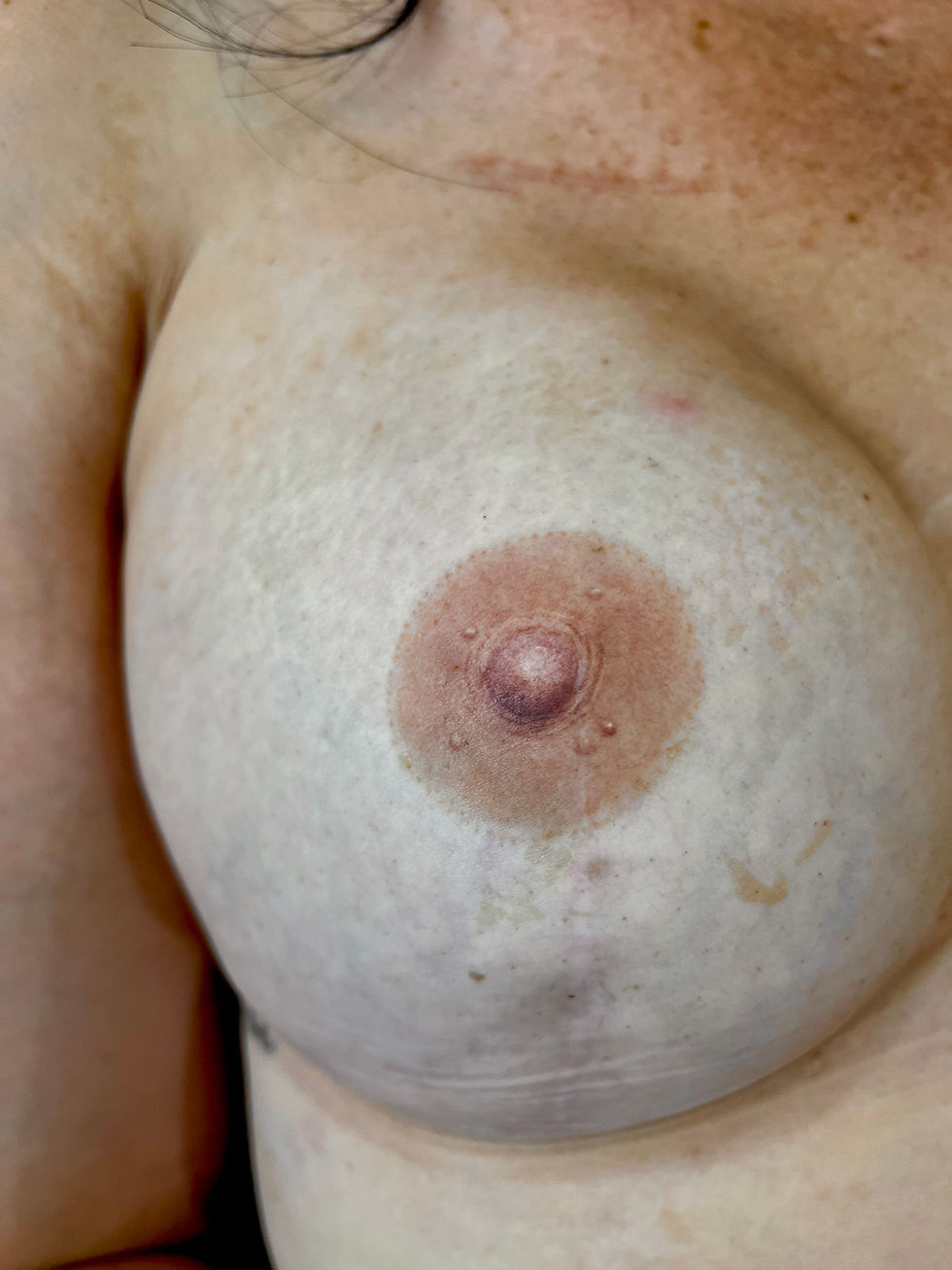
3D areola and nipple tattooing: recreating the look of a natural nipple and areola after mastectomy, breast reconstruction, breast surgery or gender-affirming top surgery.
Scar and stretch mark camouflage: using carefully matched pigment, or inkless serums, to reduce the contrast between a scar or stretch mark and the surrounding skin.
It's important to be clear about what this work is and isn't. Paramedical tattooing is a cosmetic, appearance-based service. It doesn't treat medical conditions, and a good artist always works within their scope, sets realistic expectations and refers clients back to their doctor whenever something is outside it.
Step 1: Decide which service you want to start with
Most people start with one of two services.
Scar and stretch mark camouflage is often the easiest place to begin. Almost everyone has a scar or stretch mark, so there's steady demand, and inkless serum techniques are forgiving for new hands. Many of our students find their first clients among friends and family, which is a low-pressure way to build confidence and a portfolio.
3D areola tattooing draws on more artistic skill: realism drawing, light and shadow, colour and symmetry. For many artists it's the most rewarding work they'll ever do, because it's often the final step in a long journey through breast cancer treatment or surgery. You can see what this work looks like in a real studio on Melinda's 3D areola tattooing page at Body Toowoomba.
You don't have to choose forever. Lots of artists learn one service, build a client base, and then add the other.
Step 2: Choose hands-on training (not just a video)
This is the most important decision you'll make. Paramedical work happens on delicate, often scarred or reconstructed skin, and on clients who may be emotionally vulnerable. When you're comparing courses, look for:
In-person, supervised work on live models, not just synthetic skin
Small class sizes, so a trainer can actually watch your hand
Trainers who do this work every week in their own studios
Qualified educators. In Australia, the TAE40122 Certificate IV in Training and Assessment is the standard qualification for trainers and assessors.
Theory as well as technique: skin anatomy, wound healing, colour theory, needle and machine settings, consultation and consent
Support after the course, because your first real clients will bring questions
At Kin+Sugi, both trainers, Melinda Rose Kropp and Shelby Brooks, hold the TAE40122. Classes are capped at five students for Areola and seven for Scar & Stretch Mark, and every course includes supervised work on real models. You can meet the trainers here.
Step 3: Understand certificates, infection control and licensing
This is where a lot of people get confused, so here's the straight answer.
Course certificate: after a private course you'll usually receive a Certificate of Completion. Kin+Sugi isn't a Registered Training Organisation (RTO), so our certificate isn't a nationally accredited qualification. It shows you've completed our training.
Infection control: you'll need a formal infection control certificate for skin penetration. The unit commonly required is HLTINF005, Maintain infection prevention for skin penetration treatments. It's done separately, often online. We teach correct infection control practice throughout every course, but we can't issue this unit.
Licensing and premises: rules differ between states and local councils. Some councils require your premises to be registered for skin penetration, and some states have their own tattoo licensing rules. Always check with your state health department and local council before you start treating clients. We give you guidance on this during training.
Insurance: you'll need appropriate professional indemnity and public liability insurance. Your course certificate and infection control certificate are usually part of that application.
Step 4: Get your kit and set up
You'll need a tattoo machine, needle cartridges, pigments (and serums for inkless work), PPE, disposables, consent forms and aftercare information. Kin+Sugi's in-person courses include a 'Ready to Go' student kit with a Mast wireless tattoo machine, cartridges, inks, disposables, consent and aftercare templates, and a student manual with our supplier list and a price guide, so you're not left wondering where to buy anything.
Step 5: Build confidence with your first clients
Start small. Many new artists begin with friends and family, take careful before-and-after photos (with consent), and build a portfolio from there. Keep good records, follow your aftercare protocol, and don't be afraid to ask for help. Kin+Sugi students join a WhatsApp group with their trainers and classmates for 12 months after the course, and can book a shadow day in Melinda's or Shelby's studio for a refresher.
Step 6: Keep learning
The best paramedical artists never stop learning. They practise drawing, refine their colour theory, and stay humble about what pigment can and can't do. Above all, they keep the client at the centre: listening, explaining honestly, and caring for the person as much as the skin.
Do I need tattoo experience first?
No. If you've not had any tattoo machine experience, that's completely fine. We cater all the content to complete beginners, so you won't feel out of your depth or left behind. Our Scar & Stretch Mark Camouflage course has a 3-day beginner path ($8,999) that starts with tattoo fundamentals, and a 2-day option ($7,999) for people who've used a machine before. Our 3D Areola Tattoo Course runs over 4 days ($12,000) and includes our online Areola Drawing Course free.
Ready to start?
In 2027 we're running courses on the Gold Coast and in Toowoomba, Sydney, Cairns, Perth, Melbourne and Auckland (NZ). Join the 2027 waitlist to be the first to hear the dates, or book a call and we'll talk it through with you.