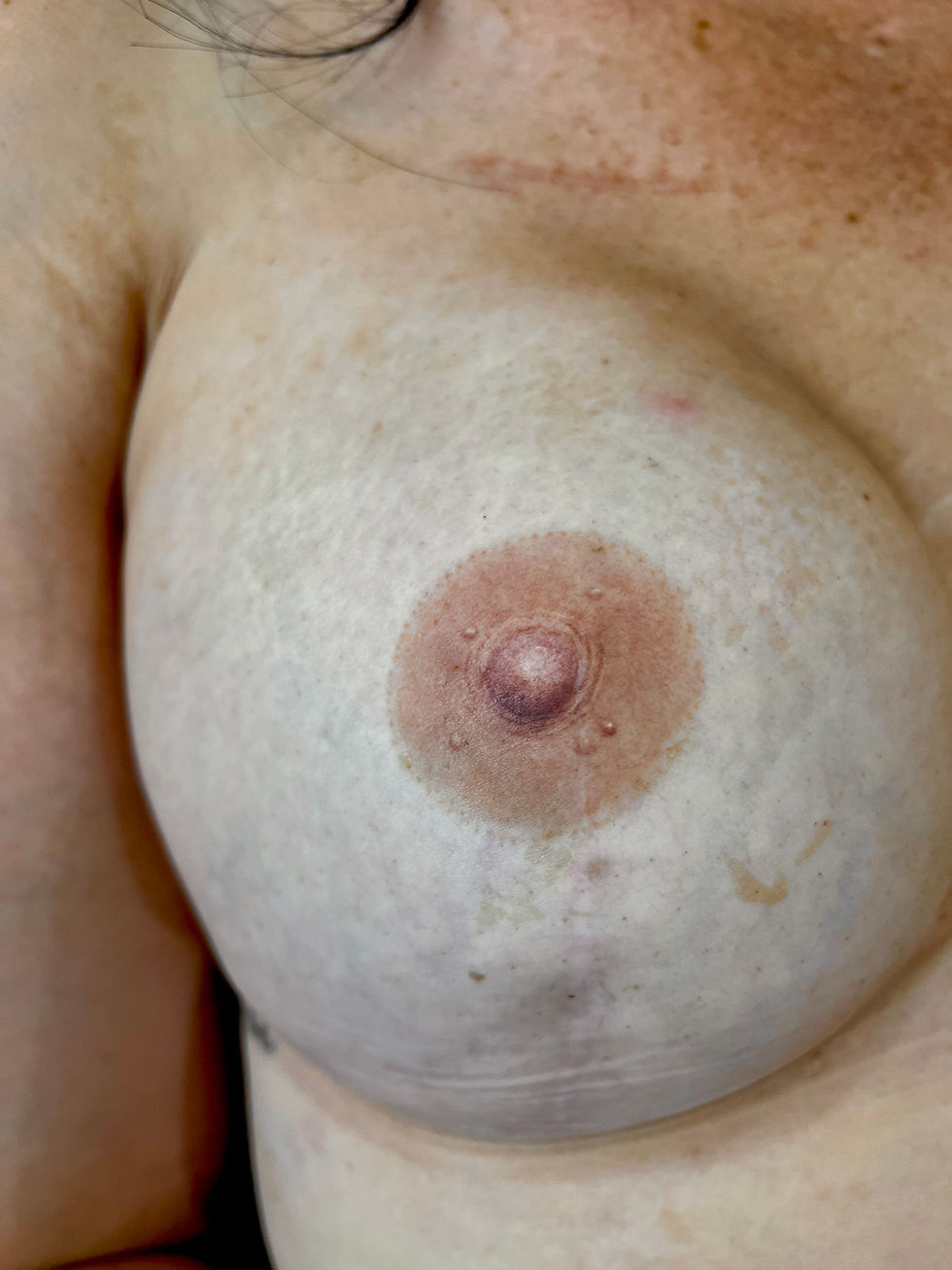
What Is Scar Camouflage Tattooing?
Scars tell a story: a caesarean, a tummy tuck, an accident, a breast surgery, a hard time in someone's life. Many people make peace with their scars. Others would simply like them to be a little less noticeable. Scar camouflage tattooing is one option that can help.
In this guide we'll explain what scar camouflage is, how it works, who it may suit, and what's involved in learning to do it.
Scar camouflage in a nutshell
Scar camouflage, sometimes called scar concealment or skin camouflage tattooing, is a paramedical tattoo technique. The artist places carefully colour-matched pigment into the skin to reduce the visible contrast between a scar (or stretch mark) and the skin around it. The aim isn't to make a scar disappear. It's to help it sit more quietly, so the eye isn't drawn to it.
Many scars are lighter than the surrounding skin because they've lost pigment. Others are pink, darker or textured. Each one is different, which is why camouflage takes careful assessment, colour theory and a lot of practice.
Ink and inkless: two approaches
Ink (pigment) camouflage uses custom-mixed pigments matched to the client's skin tone and undertone. The artist builds colour gradually and lets the skin heal between sessions, so the result blends naturally. Skin tone changes with the seasons and with tanning, so experienced artists match colour with this in mind.
Inkless camouflage uses serums rather than pigment, applied with a tattoo machine. It's typically chosen for scars or stretch marks that are textured or darker than the surrounding skin, where adding pigment wouldn't be the right choice. It's also forgiving, which is one reason it's a great starting point for new artists.
Knowing when to use each approach, and when not to treat at all, is one of the most important things you'll learn in training.
What kinds of scars and marks are treated?
Camouflage artists commonly work with:
Surgical scars, including caesarean, tummy tuck, breast lift, breast reduction and reconstruction scars
Facelift scars around the ears and hairline
Arm lift and thigh lift scars
Stretch marks from pregnancy, weight change or growth
Injury and trauma scars
Self-harm scars, which call for particular sensitivity and trauma-informed care
You can see how this looks in a working studio on Melinda's scar and stretch mark camouflage page at Body Toowoomba, including the types of scars she works with most often.
Who is it suitable for?
Not every scar is suitable, and an honest artist will say so. In general:
Scars should be fully healed and settled before treatment. Clients who are unsure should check with their doctor or surgeon first.
Raised (hypertrophic) or keloid scars, or skin with active conditions, may not be suitable for tattooing. These clients should be referred back to a medical professional.
Results vary from person to person, and most clients need more than one session.
A thorough consultation (looking at the skin, asking about health history and healing, and talking through realistic expectations) comes before every treatment. If camouflage isn't the right fit, a good artist refers the client on.
What does a session involve?
A typical treatment starts with a consultation and before photos, followed by colour matching and a patch of careful, controlled work. The skin is then left to heal, and the result is reviewed at a follow-up appointment. Aftercare matters a great deal. Clients are given clear instructions on keeping the area clean, protecting it from the sun, and what's normal (and not normal) while it heals.
Why it's such rewarding work
Scar camouflage is a service in steady demand, because almost everyone has a scar or stretch mark somewhere. It also means a great deal to the people you treat. Clients often arrive feeling self-conscious about a part of their body, and leave feeling more comfortable in their own skin. As Melinda puts it to prospective students, scars and stretch marks become an artist's "bread and butter".
Learning scar camouflage
Good scar camouflage training covers far more than holding a machine. At Kin+Sugi, our Scar & Stretch Mark Camouflage course includes:
Needle cartridges, tattoo machines and hand techniques (pendulum, stipple and circular)
Skin anatomy, wound healing and how to assess skin suitability
Precise skin-tone colour matching and in-depth colour theory
Ink vs inkless techniques, and the active ingredients in regenerative serums
Healing, precautions and managing reactions
Topical anaesthetic rules, business set-up, insurance and compliance
Supervised work on live models, with personalised feedback
You'll take home a full student kit, including a Mast wireless machine, camouflage inks and serums, cartridges and disposables, plus a student manual with our supplier list, consent forms and a price guide.
Two ways to train:
2 days – $7,999, if you've used a tattoo machine before
3 days – $8,999, the beginner path, which adds a fundamentals day
If you've not had any tattoo machine experience, that's completely fine. We cater all the content to complete beginners, so you won't feel out of your depth or left behind.
In 2027 we're running the course on the Gold Coast and in Toowoomba, Sydney, Cairns, Perth, Melbourne and Auckland (NZ). See the Scar & Stretch Mark Camouflage course in Toowoomba or on the Gold Coast, and join the 2027 waitlist to hear first when dates open.
This article is general information about a cosmetic tattoo service and isn't medical advice. Anyone considering treatment for a scar should talk to their doctor if they have any concerns about their skin or healing.